No products in the basket.
Cashmere: How to Tell if It’s Quality or Not in 10 Seconds

There are things that, once you learn them, you never go back.
Cashmere is one of them.
At first, it all seems simple. You touch a garment, it feels soft, you read “cashmere” on the bag, without looking at the ingredients label, and you think you’ve made the right choice. It’s what everyone does. It’s what we’ve all done, at least once.
Then something happens.
After a few uses, that garment that seemed perfect begins to change. The surface is no longer clean, the first dots appear, the shape relaxes, the fabric loses that presence it had at the beginning. And then you realize something isn’t right.
It’s not the cashmere that doesn’t work.
It’s the way you were taught to recognize it that’s wrong.
Because the truth is simple, but rarely explained: just reading “cashmere” isn’t enough to determine quality. And even a quick touch isn’t enough. But there’s good news. Understanding whether a cashmere garment is of high quality takes less than ten seconds.
You don’t need years of experience, you don’t need to be in the industry. You just need to know what to look for, what to feel, what to observe. And once you know, you can’t unsee it.
The first thing you need to look at is the composition label. But not only that, because it’s incomplete. When you read “100% cashmere,” you’re reading the composition, not the quality. It tells you nothing about the length of the fibers, their selection, how they were processed, or how long the garment will last. Two products with the same label can live two different lives.
So you need to change your approach. Don’t just start from what’s written. Start with what you have in your hands.
Take the fabric, slowly. Don’t just touch it. Squeeze it lightly between your fingers, compress it for a moment, and then let go. It’s a simple, almost instinctive gesture. Yet it says it all.
If the material immediately returns to its original shape, if it reacts with a certain elasticity, there is structure, there is quality. If, however, it remains a little squashed, if it seems “tired,” you already have your answer. Good cashmere doesn’t wrinkle. The quality of cashmere isn’t just softness. It’s also memory.
Then do something almost no one does. Rub the surface lightly between two fingers. Not forcefully, not to ruin it, but just enough to create a minimum of friction. It only takes a few seconds. If small, even imperceptible, pellets begin to form, it means the fibers are short, weak, and poorly selected. That garment may be beautiful today, but it won’t be tomorrow.
If, on the other hand, the surface remains clean, compact, and stable, you’re looking at something different. Something built to last.
Now bring it to your eyes. You don’t need a magnifying glass, you don’t need to be an expert. You just need to really observe. Quality cashmere has a neat, uniform, almost silent surface. There are no fibers coming out in a messy way, there’s none of that “unstable fluff” feeling often seen in cheaper products.
This is where you begin to understand.
It’s not a matter of vague sensations. It’s a matter of precise signals. And all these signals always lead to the same point: the fiber.
The quality of cashmere begins there, long before the yarn, long before the finished garment. It begins in the length of the fibers, in their fineness, in the selection of the raw material. Longer fibers mean greater resistance, less pilling, more stability. Shorter fibers mean exactly the opposite.
And this is why two seemingly identical cashmeres can behave completely differently over time.
The same goes for recycled cashmere. There’s a lot of confusion, often fueled by those who don’t really understand the process. Recycled cashmere isn’t automatically inferior. It can be an extraordinary choice, both in terms of sustainability and yield. But it brings with it an inevitable characteristic: the fiber is shorter.
This means that everything else must be done better. The selection, the spinning, the construction of the yarn. When it’s done well, the result is surprising. When it’s done poorly, it’s immediately obvious.
And this is precisely where that ten-second test comes in handy. Because in the end, beyond all the words, labels, and promises, what matters is what happens between your fingers in those few moments. The biggest mistake we continue to make is seeking immediate softness.
That almost “excessive” sensation that strikes you at first touch. But often that softness is constructed, forced, obtained with processes that have nothing to do with the true quality of the fiber. It’s a promise that doesn’t hold up over time.
True cashmere doesn’t need to exaggerate. It’s balanced, stable, alive. It doesn’t just strike you in the first second. It stays with you over time.
And when you begin to recognize it, something inevitable happens. You change your mindset.
You no longer let yourself be guided by words, but by signals. You no longer let first impressions convince you, but look for what lasts. And above all, you begin to clearly see the difference between what’s made to sell… and what’s made to last. And that’s when you truly stop making mistakes.
📩 Do you really want to learn how to recognize yarns?
If you want to go further, if you really want to understand how to choose a yarn, how to recognize quality in seconds, how to avoid mistakes that cost time and money, then sign up for the newsletter. You’ll also receive a 5% discount coupon on your first purchase.
Because there are things you won’t find written anywhere.
And once you know them, you never go back.

Follow Us on Youtube

Latest products
-
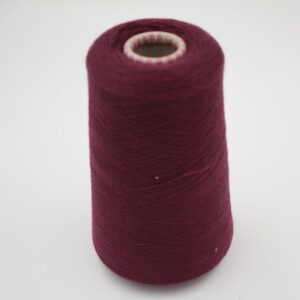
 PRESTIGE 100% Merino Extrafine nm 2/60 color bordeaux cones 540gr Original price was: €39,53.€26,35Current price is: €26,35.
Previous lowest price was €79,06.
-
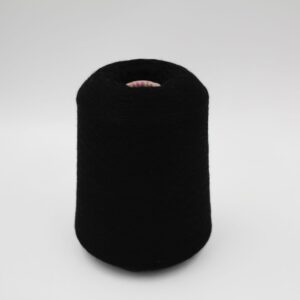 PRESTIGE 100% Merino Extrafine nm 2/60 color black cones 740gr Original price was: €54,17.€36,11Current price is: €36,11.
Previous lowest price was €108,34.
-
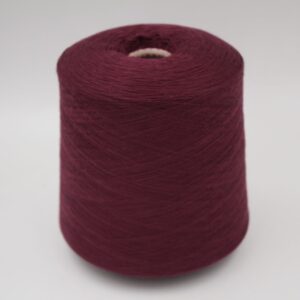 PRESTIGE 100% Merino Extrafine nm 2/60 color bordeaux cones 480gr Original price was: €35,14.€23,42Current price is: €23,42.
Previous lowest price was €70,27.
-
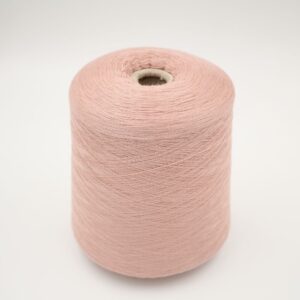 PRESTIGE 100% Merino Extrafine nm 2/60 color pink cones 580gr Original price was: €42,46.€28,30Current price is: €28,30.
Previous lowest price was €84,91.
-
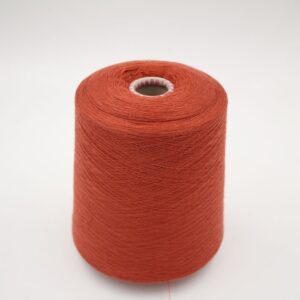 PRESTIGE 100% Merino Extrafine nm 2/60 color orange cones 770gr Original price was: €56,36.€37,58Current price is: €37,58.
Previous lowest price was €112,73.