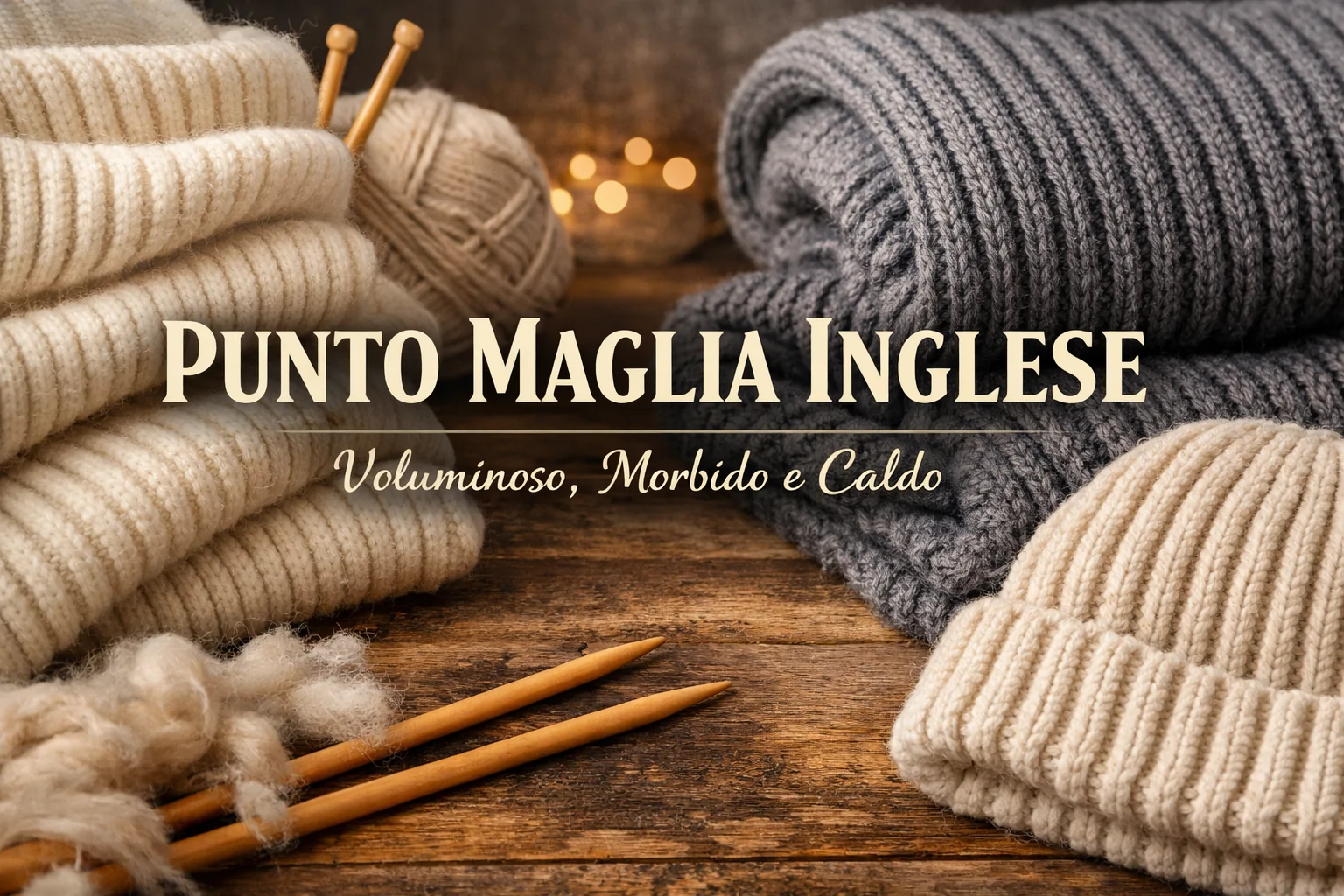
The English rib stitch is one of the softest, most voluminous, and elegant stitches in knitting. In English, it is often referred to as English rib or associated with the world of the brioche stitch.
👉 It is very different from seed stitch:
- deep ribbed structure
- soft and “puffy” appearance
- high elasticity
The English rib is based on a key technique:
👉 you don’t just work the stitch… you also work the yarn from the previous row
Basic simplified pattern:
- Row 1: knit 1, yarn over + slip 1 stitch
- Row 2: knit the stitch together with the yarn over from the previous row
💡 In practice:
- some stitches are worked twice (over two rows)
- this creates the characteristic volume
🧵 Main variations
• Classic English rib
- very soft and thick
- immediate “luxury” feel
• Fisherman rib (false English rib)
- worked by knitting into the stitch below
- similar result but slightly more compact
👉 often used in industry because it is more stable
• Brioche stitch (also two-color)
- more complex evolution
- allows premium textures and graphic effects
🎯 Technical characteristics
✔️ Very high elasticity
✔️ High volume (puffy effect)
✔️ Extremely soft hand feel
✔️ Perfect for cashmere and noble fibers
❗ Uses significantly more yarn (even +30/40%)
❗ Slower to produce (even on machines)
🧥 Applications
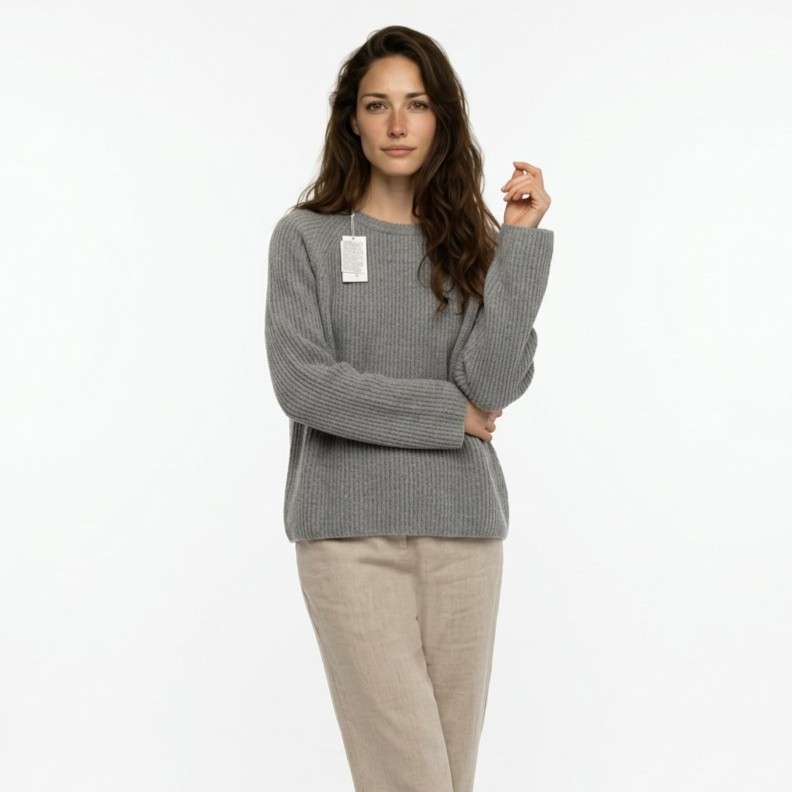
- Premium scarves (top category)
- Winter beanies
- Oversized sweaters
- Turtlenecks / high neck garments
- Voluminous cardigans
👉 For your brand:
- it is the perfect stitch for “wow-effect” products
- as soon as the customer touches it → they instantly perceive value
🏭 Industrial use (very important)
On machines such as Shima Seiki:
- produced through:
- needle selection + multiple passes
- often the fisherman rib version is used for:
- greater stability
- reduced risk of errors
- requires:
- more machine time
- more yarn
- more attention during finishing
👉 Result: a more expensive garment, but much more perceived as luxury
Why is it called “English rib”?
Here’s the interesting part 👇
📜 Origin of the name
The name “English rib” comes from:
Historical diffusion in the United Kingdom
- widely used in British textile tradition
- typical of heavy knitwear for cold climates
Use in fishermen’s and workers’ garments
- hence the name fisherman rib
- designed for:
- thermal insulation
- elasticity and comfort
Traditional naming convention
- in Italy, many stitches are named geographically
- this one became associated with England → English rib
👉 In reality:
- it was not necessarily invented in England
- but that’s where it became iconic and recognizable
🧠 Key difference vs other stitches
| Stitch | Structure | Effect |
|---|---|---|
| Seed stitch | alternating, offset pattern | flat + textured |
| Rib stitch | vertical columns | structured + elastic |
| English rib | double-worked stitches | puffy + soft + luxury |