

When we complain about the wrong things (and why slubs in yarn are not a defect)

We live in an age where there is often complaining. Sometimes with reason, other times without truly knowing what is being bought or used.
In the world of yarns — especially natural, artisanal, or quality industrial ones — this happens more often than one might think.
A concrete example?
A customer complained because, in a cone of very thick yarn (Nm 2.500) for knitting, she found a few knots.
Let's see together why it's not a defect, why it's normal, and above all, how to properly manage knots while knitting.
Knots in yarn: let's start with reality
A yarn is not a printed synthetic product, but originates from:
-
natural fibers
-
mechanical processing
-
industrial and artisanal processes
-
inevitable interruptions during spinning
Knots are not randomly placed and are not a sign of poor quality.
They are the natural result of a real, not fake, process.
Even in the best Italian spinning mills in the world, knots exist. Always.
What is a splicer (and why it can't always be used)


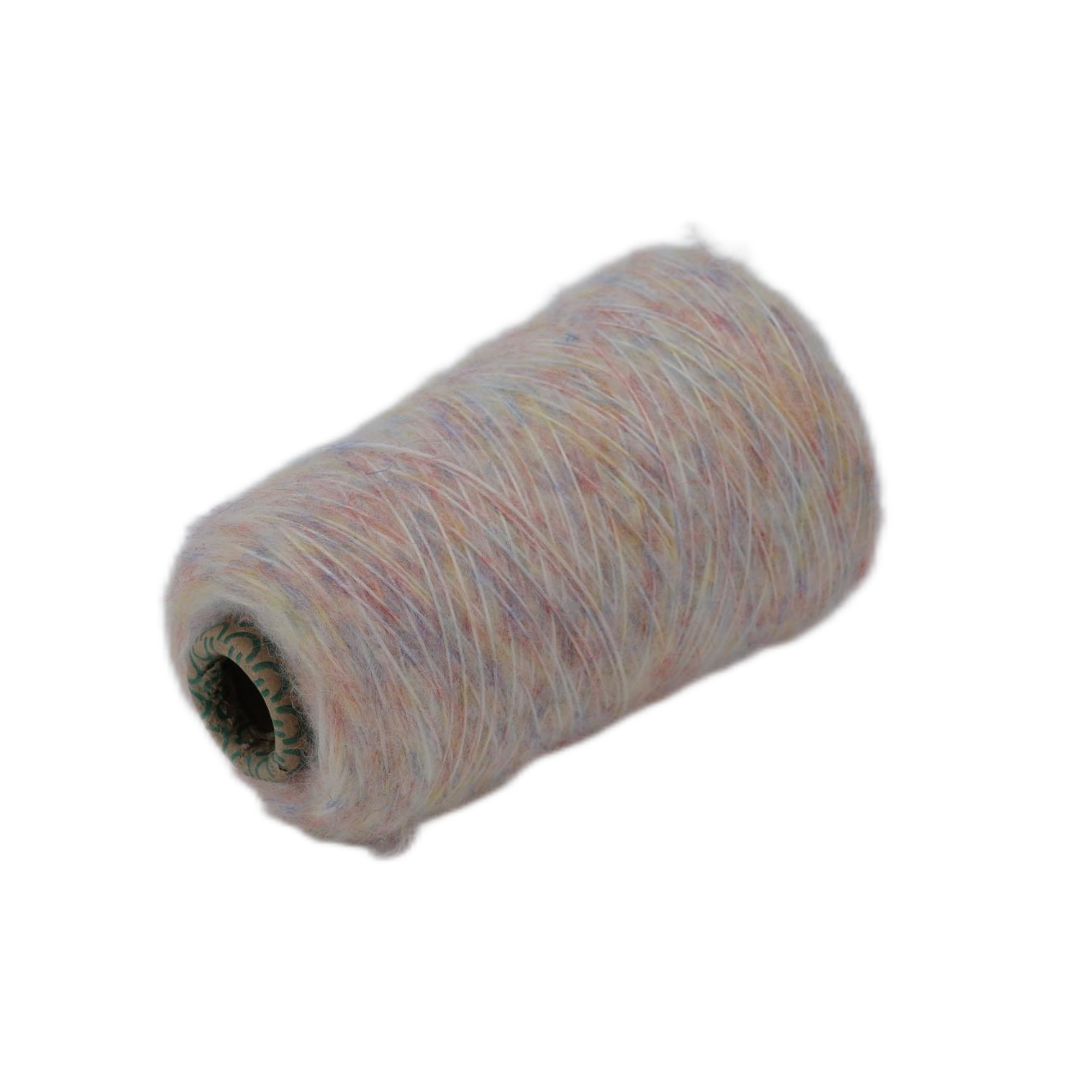
A splicer is a machine that joins two yarn ends without a knot, using compressed air or water to intertwine the fibers.
The result is a join that is:
-
cleaner
-
more regular
-
almost invisible
But there's a problem (physical, not commercial)
With very thick yarns, such as:
-
Nm 2.500
-
yarns for large needles
-
chunky or super bulky yarns
👉 the splicer does NOT work.
The reason is simple:
-
the fibers are too bulky
-
the twist is different
-
it's not possible to guarantee a stable join
In these cases, the only possible technical solution is a knot.
"But then I'll buy the yarn directly from the spinning mill"
In theory, it sounds good.
In practice:
-
❌ spinning mills only sell to VAT-registered businesses
-
❌ they often require high minimum order quantities
-
❌ the retail price would be more than double
-
❌ even at the spinning mill you would find knots
Yes, you read that right:
even yarn purchased directly from the manufacturer has knots.
Why? Because yarn is continuous only in theory, not in productive reality.
The knot is not the problem. It's how you work it.
Knitters know this:
a knot doesn't ruin a garment, if you know how to handle it.
How to correctly work a knot while knitting
Here are the practical rules 👇
1. NEVER work the knot as is
The knot should not be worked into the stitch.
2. Undo the knot
As soon as you encounter it:
-
stop
-
gently untie it
3. Use the intertwining technique
-
overlap the two ends by 6–8 cm
-
knit normally, taking both strands
-
after a few rows, cut the excess
Alternatively:
-
you can use the invisible seam technique
-
or a micro-felting (only with animal yarns)
4. Position the yarn change intelligently
-
on the side of the work
-
near a seam
-
never in the center on a visible stitch
A knot-free yarn doesn't exist (if it's real)
If a yarn:
-
is natural
-
is thick
-
is not fake or glued
-
is not plastic
👉 it will have knots, sooner or later.
And this is not a defect, but proof that:
-
it hasn't been "tampered with"
-
it's not a superficial industrial product
-
it's real
Complaining is easy.
Understanding what you have in your hands requires a minimum of knowledge.
A knot in a thick yarn:
-
❌ is not a defect
-
❌ is not a scam
-
❌ does not indicate poor quality
✔️ is normal
✔️ is technical
✔️ is manageable
Knitters don't seek fake perfection, but the truth of the material.
And the truth, sometimes, also has a knot.