
Lambswool: what it is, where it comes from, and why it’s so highly regarded
 When it comes to quality wools, lambswool holds a special place. It's not an exotic fiber like cashmere or alpaca, but it represents one of the purest and most natural expressions of traditional wool. In this article, we'll look at what lambswool is, where it comes from, and why it is so highly valued in the world of knitwear.
🐑 What is Lambswool
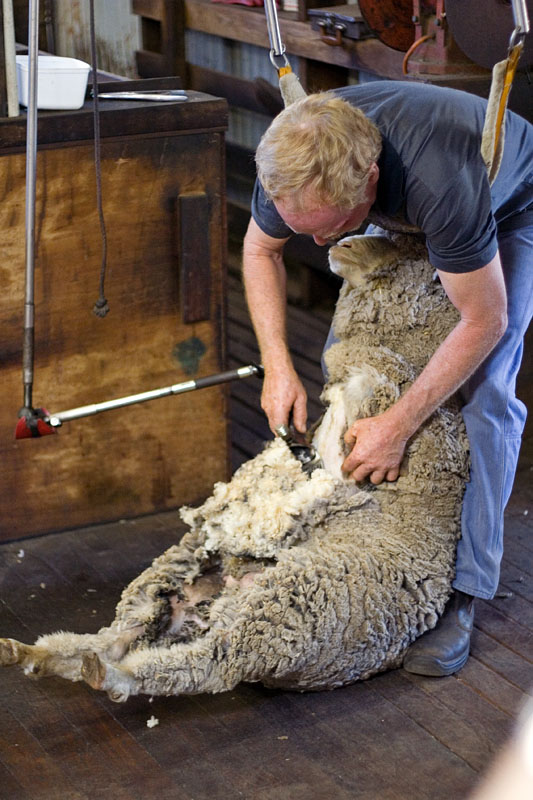
Lambswool is the wool obtained from the first shearing of a young sheep, generally around 6-7 months old.
This first fiber differs from that of subsequent shearings because:
- it is finer
- it is softer
- it is less stiff and prickly
In practice, it is the most delicate and "clean" version of sheep's wool, before the fiber thickens over time.
Check out the lambswool yarns available on our website, click here
🌍 Where it comes from
Lambswool primarily comes from countries with a long wool tradition:
- United Kingdom (Scotland in particular)
- Australia
- New Zealand
- some areas of Northern Europe
These areas offer ideal conditions for sheep farming: climate, pastures, and genetic selection all contribute to the quality of the fiber.
In particular, Scottish lambswool is very famous for its slightly "hairy" and natural appearance, typical of traditional English sweaters.
✨ Characteristics of lambswool
Lambswool is prized for a perfect balance between comfort and durability:
- Natural softness → more pleasant to the touch than standard wool
- Excellent thermal insulation → retains heat without being heavy
- Elasticity → ideal for garments that need to maintain their shape
- Lively and authentic look → slightly hairy, very natural
- Breathability → regulates body temperature
It's "real" wool, not treated to become artificially smooth: it retains a natural character that many appreciate.
🧵 How it's processed
After shearing, the wool goes through several steps:
- Washing (scouring) → to remove impurities and natural greases
- Carding → to align the fibers
- Spinning → transformation into yarn
- Twisting (if necessary) → to add strength and structure
Depending on the processing, the yarns can be more airy and voluminous or more compact and regular.
👕 Where it's used
Lambswool is widely used in knitwear, especially for:
- classic and winter sweaters
- cardigans
- scarves and accessories
- heritage or Nordic style garments
It's perfect for those looking for a warm, natural, and authentic product, without the cost of more precious fibers.
⚖️ Lambswool vs other fibers
To better understand its positioning:
- compared to traditional wool → it is softer
- compared to merino → it is more rustic and less uniform
- compared to cashmere → it is less fine, but more durable and accessible
👉 It is therefore a perfect middle ground between quality and price.
Being a natural and not excessively treated fiber:
- it can be slightly prickly for very sensitive skin
- it has a more "lively" and less perfect appearance
- it can develop pilling over time
But these very characteristics make it authentic.
Lambswool is a wool that tells a story: that of the fiber's first growth, its purity, and its naturalness.
It's not just a material, but a precise choice: 👉 natural comfort, authentic warmth, and accessible quality
For those who work in the knitwear world—or simply love genuine garments—lambswool remains one of the most interesting fibers to know and use.