
The swatch: because it's the only way to truly understand a yarn
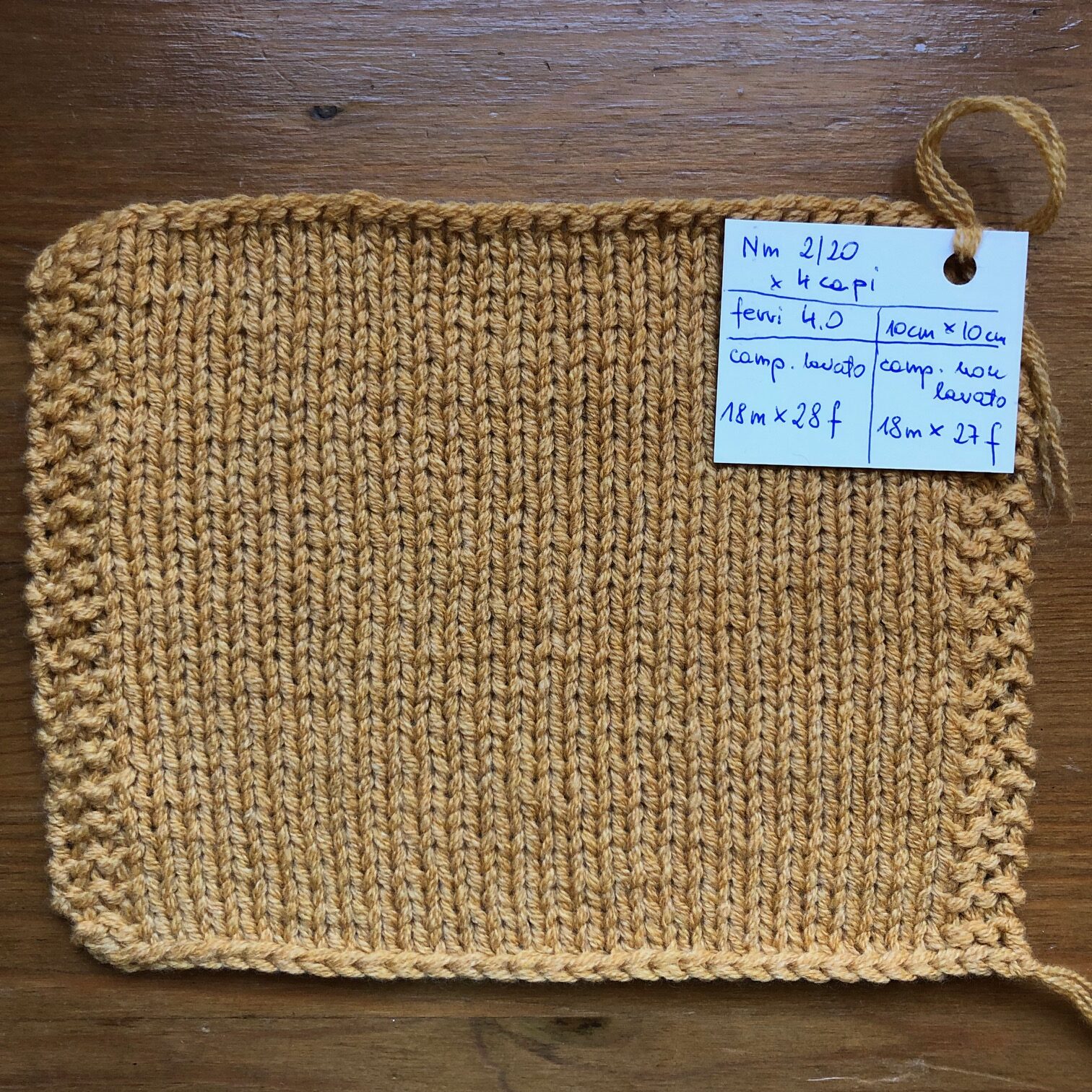 Anyone who knits, sooner or later, will hear:
"You need to make a swatch."
However, many skip it.
Others do it carelessly.
Still others think it's a waste of time.
In reality, the swatch is the only real tool that allows you to understand how a yarn will behave once it has been worked and washed. Everything else is theory.
What a swatch really is
A swatch is not just a small knitted square or a way to count stitches
👉 The swatch is a miniature simulation of the finished garment.
It helps to understand:
-
aesthetic yield
-
hand/feel
-
elasticity
-
stability
-
reaction to washing
-
actual consumption
Why Nm is not enough (and never will be)
Two yarns with the same Nm can:
-
stretch differently
-
sag or hold their shape
-
become softer or drier after washing
-
change appearance completely
👉 All these things are not written in any technical sheet.
👉 They only emerge when the yarn is worked.
The pre-wash swatch lies (a little)
A common mistake is to judge the yarn fresh off the needles.
Many yarns:
-
open up after washing
-
compact
-
change hand
-
stabilize only after drying
🔑 The true swatch is the washed and dried one, not the freshly knitted one.
What a good swatch really tells you
A well-made swatch tells you:
1️⃣ If the yarn is suitable for the project
-
is it too loose?
-
too stiff?
-
too gappy?
-
too heavy?
2️⃣ If the tension is correct
-
is the stitch balanced?
-
does the fabric breathe?
-
does it hold its shape?
3️⃣ How it reacts to washing
-
does it felt?
-
does it grow?
-
does it lose elasticity?
-
does it improve?
4️⃣ How much yarn you will actually use
-
more realistic estimates
-
less waste
-
fewer surprises at the end of the project
Hand-knitted swatch ≠ machine-knitted swatch
Another common mistake: thinking that just one swatch is enough.
-
By hand:
-
more elastic hand
-
human irregularity
-
more "lively" result
-
-
By machine:
-
constant tension
-
greater regularity
-
different yarn behavior
-
👉 The same yarn can seem perfect when hand-knitted and problematic when machine-knitted (or vice versa).
How big a serious swatch should be
A true swatch is not a stretched-to-death 10x10cm one.
Practical advice:
-
at least 15x15 cm
-
knitted like the final garment
-
washed the same way you'll wash the garment
-
left to rest
Only then do the stitches "settle".
The swatch saves you time (not the opposite)
Skipping the swatch often means:
-
unraveling
-
re-doing
-
wasting yarn
-
wasting hours
Making a good swatch means:
-
deciding beforehand
-
making small mistakes
-
knitting peacefully
👉 The swatch does not slow down the project.
👉 It prevents the project from failing.
A fundamental principle
The yarn on the cone promises.
The swatch delivers or betrays.
Until you work it and wash it, you don't truly know a yarn.
The swatch is:
-
a technical tool
-
a reality check
-
a silent ally
Those who learn to trust the swatch:
-
choose yarns better
-
make fewer mistakes
-
achieve more successful garments
-
truly understand what they have in their hands