
EcoCashmere: Quality and Savings
When working with various yarns by hand, you should always focus on quality. Why? Because handcrafting is very valuable; it takes up a lot of our time. If we use low-quality yarns, we waste the most precious thing we have: time. After hours and hours of work, our garment might only withstand the first wash, or, even worse, after wearing it a few times, it could lose its shape…
Choosing quality often means spending more money. Quality has its value, obviously.
Cashmere is one of the most precious yarns available. The prices, as we all know, are very high, but… there is a "but" that is worth considering. It's called EcoCashmere. In this article, you can read what it is and how it is produced. In short, it is regenerated cashmere (produced by an Italian company). Yes, precious things are not thrown away; perhaps they are transformed… Thanks to a particular production process, it's possible to lower the price of this cashmere while maintaining quality.
So, to the question: "Is it possible to have quality and savings?" I answer: absolutely yes!
I decided to use EcoCashmere for my upcoming creations and share my experience and patterns with you.
Summer is now ending, and perhaps it's time to start thinking about Christmas gifts. As you know, I love scarves, so today I'm offering you another scarf, this time crocheted precisely with EcoCashmere.
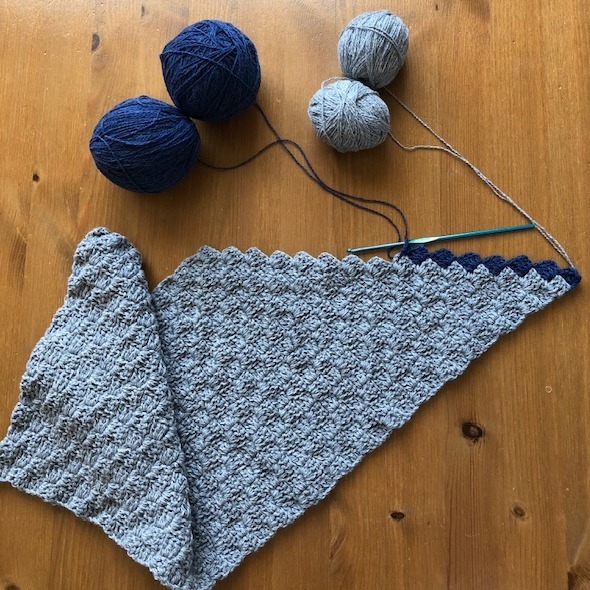
I used 2 strands of yarn with a 2/13 count, so it's thin enough (but not too thin) to be crocheted (in my case, a size 3 crochet hook); the hook size depends on your tension, so choose the right one for you.
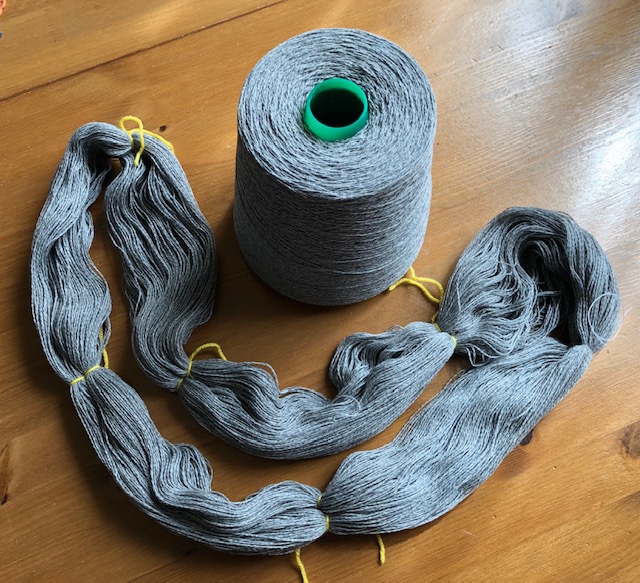
On the Hircus Filati website, all yarns on cones need to be treated (you will find information on how to do this on the site), so, as always, I made a well-tied hank in several places, washed it, and then made 2 balls.
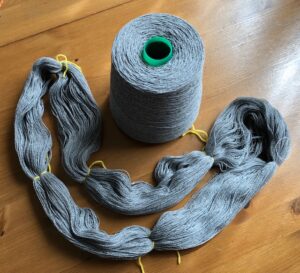
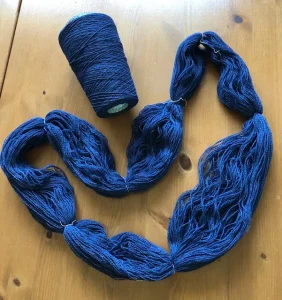 I must say that this step can be avoided because EcoCashmere, being a regenerated yarn (washed multiple times previously), does not have the same characteristics as unregenerated cashmere. The difference between treated (washed) and untreated yarn is truly irrelevant. Let me explain: the unwashed one is slightly rough; after washing, it becomes softer, but the dimensions practically do not change.
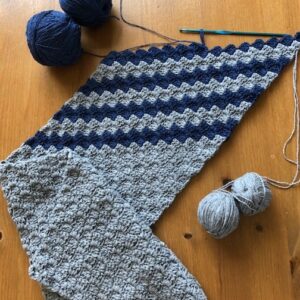
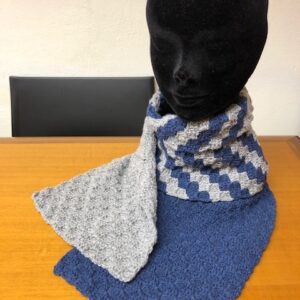 I made the scarf using the C2C (corner to corner) technique, which I described in this post. If you prefer a video tutorial, you can watch it on my Facebook page. I want to emphasize once again that this stitch is truly fantastic, relaxing, and enjoyable to make. Many of my students, as enchanted as I am by C2C, have made entire blankets. An EcoCashmere blanket? Why not!
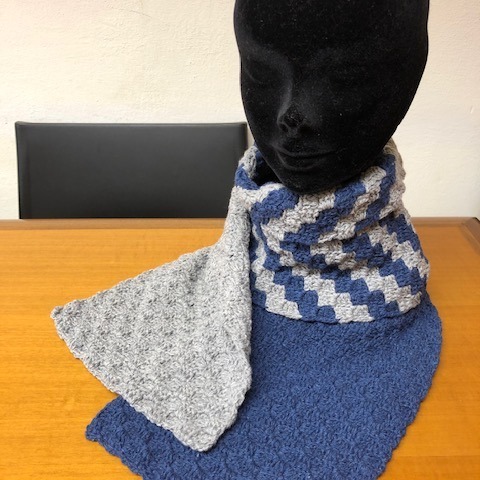
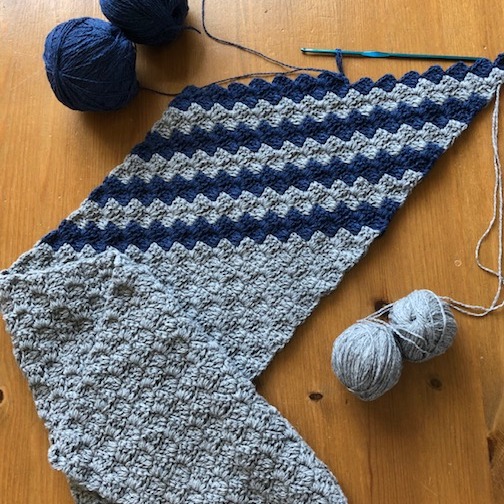
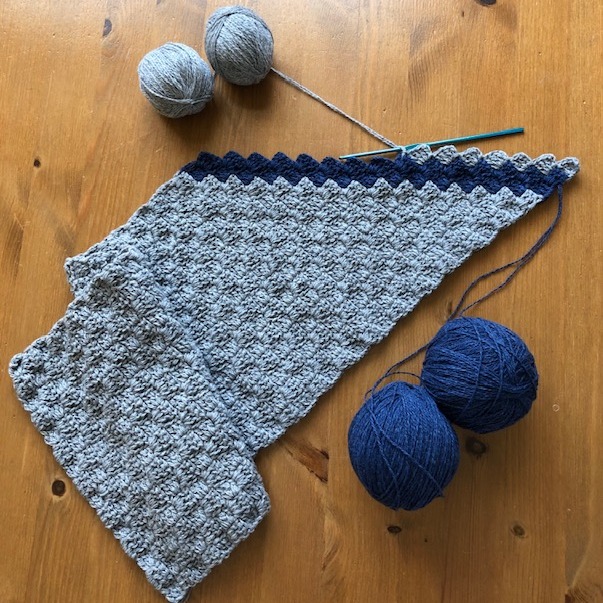
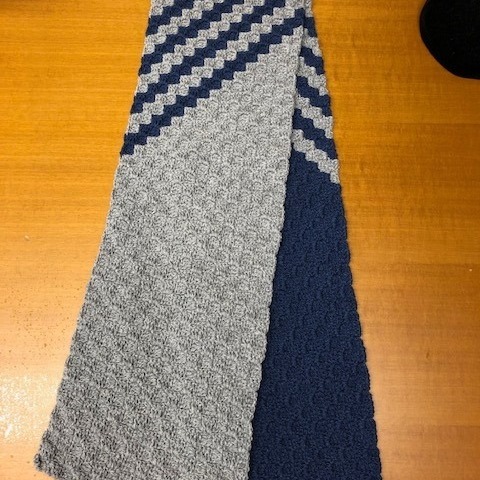
Let's go back to the scarf. One-third of the scarf is made with gray, one-third with stripes (2 rows with gray alternating with 2 rows with blue), and finally, one-third with blue.
I made the scarf using the C2C (corner to corner) technique, which I described in this post. If you prefer a video tutorial, you can watch it on my Facebook page. I want to emphasize once again that this stitch is truly fantastic, relaxing, and enjoyable to make. Many of my students, as enchanted as I am by C2C, have made entire blankets. An EcoCashmere blanket? Why not!
Let's go back to the scarf. One-third of the scarf is made with gray, one-third with stripes (2 rows with gray alternating with 2 rows with blue), and finally, one-third with blue.
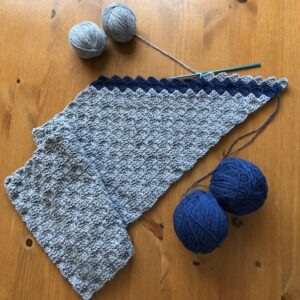
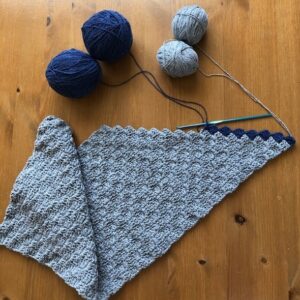 I am satisfied, and I hope you like it too :-).
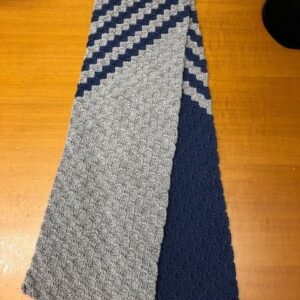 Alicja Kwartnik for Hircus Filati
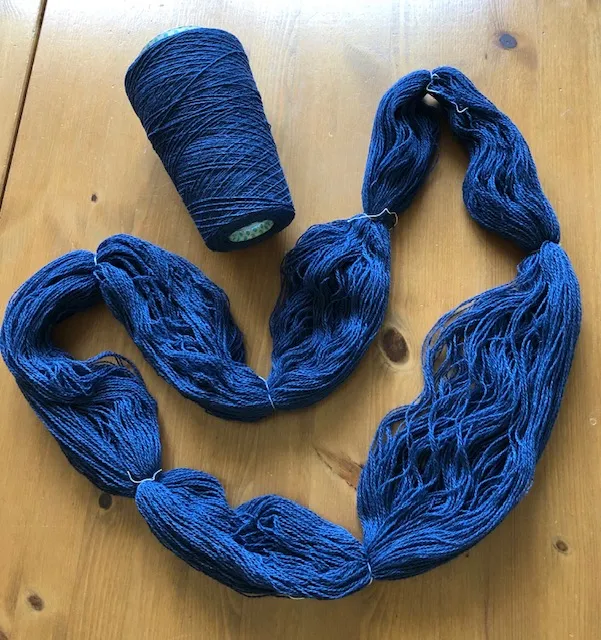 I must say that this step can be avoided because EcoCashmere, being a regenerated yarn (washed multiple times previously), does not have the same characteristics as unregenerated cashmere. The difference between treated (washed) and untreated yarn is truly irrelevant. Let me explain: the unwashed one is slightly rough; after washing, it becomes softer, but the dimensions practically do not change.
 I made the scarf using the C2C (corner to corner) technique, which I described in this post. If you prefer a video tutorial, you can watch it on my Facebook page. I want to emphasize once again that this stitch is truly fantastic, relaxing, and enjoyable to make. Many of my students, as enchanted as I am by C2C, have made entire blankets. An EcoCashmere blanket? Why not!
Let's go back to the scarf. One-third of the scarf is made with gray, one-third with stripes (2 rows with gray alternating with 2 rows with blue), and finally, one-third with blue.
I made the scarf using the C2C (corner to corner) technique, which I described in this post. If you prefer a video tutorial, you can watch it on my Facebook page. I want to emphasize once again that this stitch is truly fantastic, relaxing, and enjoyable to make. Many of my students, as enchanted as I am by C2C, have made entire blankets. An EcoCashmere blanket? Why not!
Let's go back to the scarf. One-third of the scarf is made with gray, one-third with stripes (2 rows with gray alternating with 2 rows with blue), and finally, one-third with blue.
 I am satisfied, and I hope you like it too :-).
 Alicja Kwartnik for Hircus Filati