
How to Calculate the Quantity of Cashmere for a Knitting Project - Part IV: Gloves, Hats, Socks
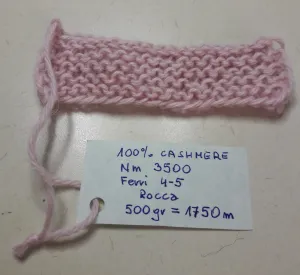 This small database will be very useful when you want to use your leftovers. Just weigh the ball of yarn and calculate the yarn's yardage.
Here's a practical example:
The yarn I bought weighed 500g and measured 1750m. There's a ball left weighing 95g. The calculation I need to do is this:
(1750 m x 95 gr) : 500 = 332.5 m
Now, knowing how many meters the yarn measures, I can choose an accessory to make.
If you bought the yarn on cones, remember that it is yarn to be treated.
Below you'll find tables with information regarding the yarn yardage needed to make gloves, hats, and socks. I remind you that, as I've already explained in previous posts, this is an approximate calculation for stockinette stitch. If you have "tight hands" or want to make fancy stitches, you need to increase the amount of yarn.
This small database will be very useful when you want to use your leftovers. Just weigh the ball of yarn and calculate the yarn's yardage.
Here's a practical example:
The yarn I bought weighed 500g and measured 1750m. There's a ball left weighing 95g. The calculation I need to do is this:
(1750 m x 95 gr) : 500 = 332.5 m
Now, knowing how many meters the yarn measures, I can choose an accessory to make.
If you bought the yarn on cones, remember that it is yarn to be treated.
Below you'll find tables with information regarding the yarn yardage needed to make gloves, hats, and socks. I remind you that, as I've already explained in previous posts, this is an approximate calculation for stockinette stitch. If you have "tight hands" or want to make fancy stitches, you need to increase the amount of yarn.
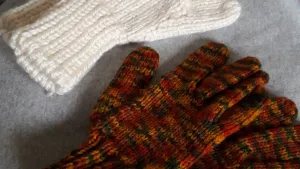
Gloves
|
Approximate number of stitches in 10 cm (stockinette stitch) |
hand circumference: 18 cm |
hand circumference: 19 cm |
hand circumference: 20.5 cm |
hand circumference: 21.5 cm |
hand circumference: 23 cm |
|
20 |
101 m |
120 m |
141 m |
161 m |
181 m |
|
24 |
143 m |
169 m |
199 m |
227 m |
256 m |
|
28 |
158 m |
186 m |
219 m |
250 m |
282 m |
|
31 |
173 m |
205 m |
241 m |
275 m |
310 m |
|
35 |
190 m |
225 m |
264 m |
302 m |
340 m |
Hats
|
Approximate number of stitches in 10 cm (stockinette stitch) |
circumference 42 cm (0-6 months) |
circumference 47 cm (6-18 months) |
circumference 51 cm 18 months-4 years |
circumference 53.5 cm adults S |
circumference 58.5 cm adults M-L |
|
16 |
61 m |
88 m |
114 m |
139 m |
170 m |
|
20 |
77 m |
112 m |
144 m |
175 m |
214 m |
|
24 |
109 m |
158 m |
203 m |
248 m |
303 m |
|
28 |
120 m |
174 m |
224 m |
273 m |
334 m |
|
31 |
132 m |
191 m |
246 m |
300 m |
367 m |
|
35 |
145 m |
210 m |
270 m |
330 m |
403 m |
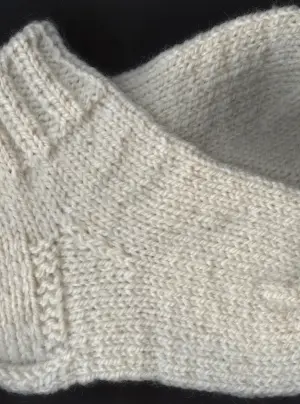
Socks
|
Approximate number of stitches in 10 cm (stockinette stitch) |
Child 2 – 8 years |
Size S women |
Size M - L women |
Size S men |
Size M - L men |
|
20 |
88 – 126 m |
172 m |
205 – 231 m |
255 m |
284 – 318 m |
|
24 |
124 – 179 m |
243 m |
290 – 327 m |
361 m |
401 – 450 m |
|
28 |
137 – 197 m |
268 m |
319 – 360 m |
397 m |
442 – 495 m |
|
31 |
150 – 216 m |
294 m |
351 – 395 m |
437 m |
486 – 545 m |
|
35 |
165 – 238 m |
323 m |
386 - 434 m |
480 m |
534 – 598 m |
-
-
Needle Size
Approximate number of stitches / 10 cm swatch (stockinette stitch)
2.25 – 3.25
31 - 26
3.25 – 3.75
25 – 28
3.75 – 4.5
28 – 20
4.5 – 5.5
20 – 16
5.5 - 8
15 – 12
-