

Hand-working machine yarn

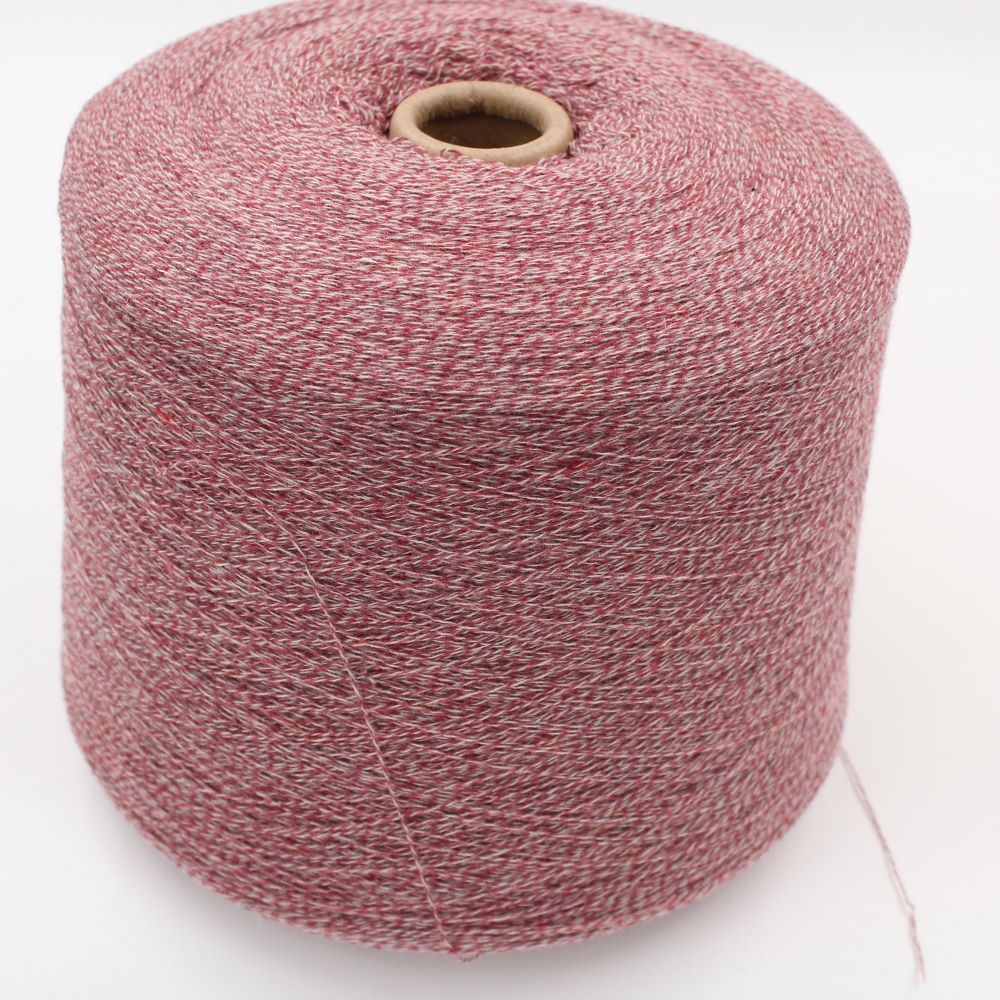 Fine machine yarns, such as cashmere, yak, or camel, can also be easily hand-knitted by working them with multiple plies.
With a 500 gr cone of 2/28000 count cashmere, which is generally worked on a 12 gauge machine or a 7-8 gauge machine with two plies, you can also have fun working it with multiple plies.
Accessories, for example, have a low consumption of yarn. With a 500 gr cone of cashmere, you can make various accessories, depending on how many plies it is worked with.
You can make one accessory with the yarn combined with two plies, and another with the same yarn combined with 4, 5, 6, 8, or as many plies as you want.
You can combine the thickness (gauge) and count you desire.
I will also give an example in mathematical terms of yarn gauge and count, assuming that a 500 gr cone of 2/28000 count yarn contains 7000 meters of yarn. So there will be 1400 meters in 100 grams.
If I work it with two plies, it will become 3500 meters in 500 gr, 700 meters in 100 gr.
If I work it with 4 plies, it will become 1750 meters in 500 gr, 350 meters in 100 gr.
And so on…
Of course, you need to be careful when working with knitting needles because the needle can get between the threads and leave some threads exposed, but this is not a problem for more experienced knitters and designers.
The effort is in putting such fine yarn with multiple plies. But I have good news for you, in fact, from today we have the possibility to split the cones.
We cannot combine it, but if you wish, we can divide the 500 gr cone into 5 cones of 100 gr each (or into two of 250 gr or into three of 166 gr, or into 4 of 125 gr each) and without any extra charge, you just need to request it using the notes space that appears when you complete the order on our website.
By doing so, those with more knitting dexterity can also work directly from the cones, taking the threads from the cones themselves.
The advice, as always, is to make a swatch and wash it before making the final piece. Yarn on cones, especially machine yarn, is not washed (treated), as knitting mills that use it in quantities generally always wash the finished garment. Furthermore, on knitting machines, it is advisable to work with untreated yarns.
In the end, the result, both in terms of hand, loft, softness, and workability, will be the same as a thicker knitting yarn.
If you like this article and want to share it with friends who you think might be interested, send it to them by email and share it on social networks using the buttons you see below, and leave me a comment in the space provided below.


