

How to choose the right yarn starting from the project (and not just the title)

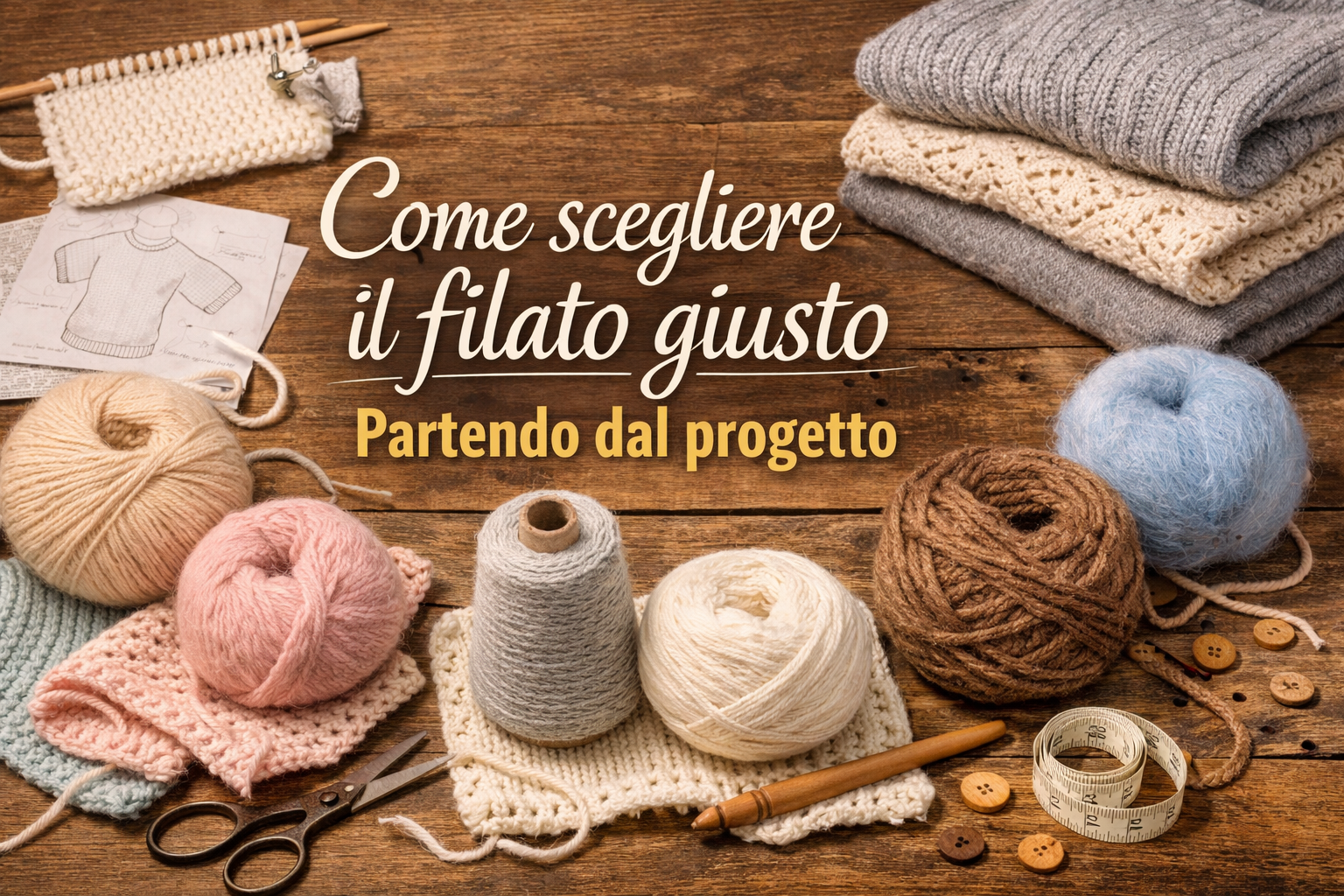 When choosing a yarn, the most common mistake is to start with the wrong question:
“Do I like this yarn?”
The right question, however, is:
👉 “Is this yarn suitable for what I want to make?”
A good project always comes from a balance between end use, garment structure, and yarn characteristics. Let’s see how to make the right choice, step by step.
1️⃣ Always start with the project, not the yarn
Before even looking at Nm, composition, or color, ask yourself:
-
Is it a garment for everyday wear or something special?
-
Does it need to be warm, light, breathable, or durable?
-
Should it drape softly or hold its shape?
-
Is it an accessory or a structured garment?
🔑 The same yarn can be perfect for a scarf… and terrible for a sweater.
2️⃣ Define the garment's end use
Some practical examples
-
Scarf / stole
-
soft hand
-
volume
-
elasticity
-
even loosely twisted yarns work well
-
-
Sweater
-
balance between softness and durability
-
good shape retention over time
-
stable and regular yarn
-
-
Hat
-
elasticity
-
shape memory
-
yarn that doesn't "give way"
-
-
Elegant garment
-
fineness
-
clean surface
-
worsted or well-twisted yarn
-
3️⃣ Choose the right fiber (before the count)
The fiber matters more than the Nm number.
-
Cashmere
-
warm
-
light
-
very soft
-
ideal for garments in direct contact with the skin
-
-
Wool
-
durable
-
elastic
-
perfect for structured knitwear
-
-
Recycled yarns
-
more voluminous
-
less regular
-
ideal for casual and comfortable garments
-
-
Cotton
-
less elastic
-
cool
-
great for summer garments, less so for structured ones
-
👉 Same Nm, different fiber = completely different result.
4️⃣ Evaluate the thickness based on the final result
The count (Nm) is useful, but it must be interpreted in relation to the project.
-
Fine yarns (high Nm)
-
light garments
-
elegant knitwear
-
clean surfaces
-
-
Medium yarns
-
everyday use
-
versatility
-
good compromise between weight and warmth
-
-
Chunky yarns (low Nm)
-
warm garments
-
rustic look
-
prominent textures
-
⚠️ A yarn that is too thick can make a garment stiff.
⚠️ One that is too fine can appear meager and "flimsy."
5️⃣ Consider the yarn structure
It's not just about "how thick it is."
Also important are:
-
twist (high = more compact, low = softer)
-
number of plies (more stable when plied)
-
carded or combed
-
regularity
👉 A stable yarn is essential for:
-
sweaters
-
garments that need to last
-
machine knitting
6️⃣ Think about the working method (needles, crochet, or machine)
The same yarn behaves differently depending on how it's worked.
-
By hand (needles)
-
elasticity is needed
-
the hand is fundamental
-
-
By machine
-
regularity matters
-
pay attention to tension
-
the count must be compatible with the gauge
-
A yarn perfect on paper can become unmanageable if worked incorrectly.
7️⃣ Always do a test (swatch)
It's the most underestimated step, but the most important.
The swatch is for:
-
understanding the real outcome
-
seeing the hand after washing
-
checking stability and drape
-
avoiding irreversible mistakes
👉 The yarn "reveals itself" only after being worked.
There is no universally perfect yarn.
There is the right yarn for that project.
Learning to choose by starting with the final result means:
-
less waste
-
fewer mistakes
-
better garments
-
greater satisfaction
Choosing a yarn is not a matter of numbers, but of consistency between project, material, and working method.
When you learn to start with the project:
-
the Nm becomes a tool
-
the fiber a conscious choice
-
the final result is never random


