

C2C to Patchwork with Eco Cashmere

Lately, I've been working a lot with Eco Cashmere to learn more about this yarn which, in addition to having a low environmental impact, is of high quality despite its very affordable price.
Today I want to show you another accessory made with a C2C crochet patchwork technique. Before I do that, however, I would like to address an important topic.
As you surely know, the yarns on cones sold by Hircus Filati are untreated, meaning, simply put, they have not been washed. In this post, you will find important information on how to treat (wash) yarns.
I personally tried both methods, suggested by the owner of Hircus Filati, Federico Scatizzi.
I experimented with the two procedures on these two scarves.
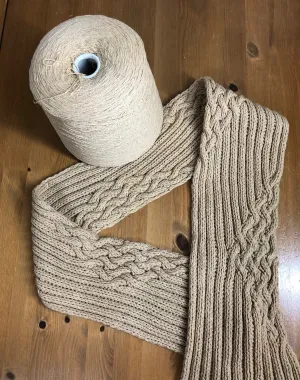
scarf knitted with 3 strands of ecocashmere 2/13
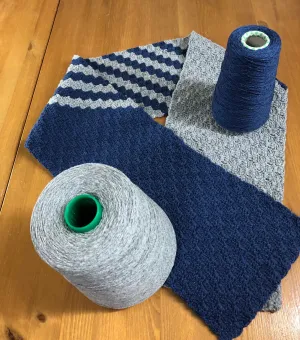
scarf crocheted with 2 strands of eco cashmere 2/13
I want to share my observations with you, based on my personal experience, the experience of someone who has been teaching and working with knitting and crochet for many years.
The procedure I would choose if I were making accessories (scarves, shawls, blankets, etc.) is this:
after making and washing a swatch (as Federico suggests in the video below), to check the needle/hook size and the final effect, I would make my accessory using the untreated yarn. Why? For a very simple reason: the variations in the accessory's measurements are not essential. If the scarf shortens and narrows by a few centimeters, it's not a problem.
2. The procedure I would choose if I were making garments (sweaters, vests, cardigans, etc.) is this:
first, I would treat the yarn, making and washing the skeins (to learn how, watch the video below). Why? Because this way I could simply work my garment to the correct size without having to calculate any potential shrinkage of the fabric after washing.
Now I'm moving on to a new proposal. The C2C technique course I organized in November was a great success. Many people asked me to repeat it because they missed it. So I decided to launch another course soon, changing the pattern, of course.
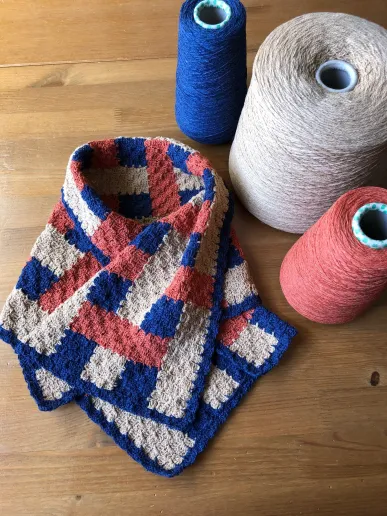
C2C crochet technique with 1 strand of eco cashmere 2/13
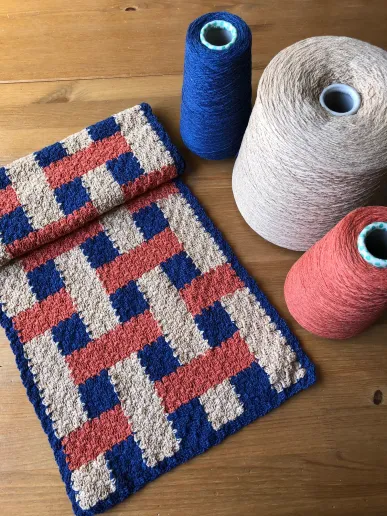
I used Eco Cashmere (count 2/13) and a 2 mm crochet hook (I have a "loose" hand). I worked with untreated yarns, directly from the cones. The finished neck warmer measured 28 x 85 cm, after washing it was 27 x 90 cm. I must say I am very satisfied with the final effect, especially the right thickness and softness of my garment.
The pattern I propose for the new course is very versatile; you can use it to make shawls, scarves, neck warmers, blankets, etc.
To sign up for the (free) course, visit my Facebook page and send me a private message; I will add you to the group and inform you of the start date.
If you already know the technique and don't need the course, you can download the pattern in PDF by clicking.
I hope you will enjoy it, as I did, working with Eco Cashmere (2/13) and the C2C patchwork technique.
Alicja Kwartnik for Hircus Filati


